 En
En
 Français
 Nederlands
 Deutsch
-10%
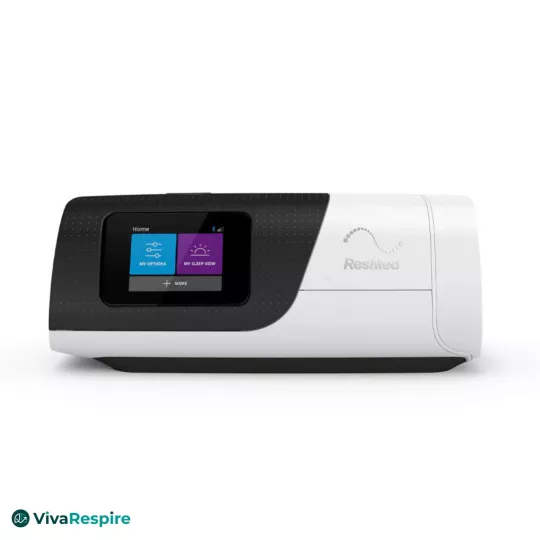

An Auto CPAP (also called APAP) is a CPAP machine that automatically adjusts pressure breath by breath, within a range prescribed by your doctor (typically 4–20 cmH₂O). It adapts to your real-time needs: light sleep, REM, supine position, nasal congestion, etc. It is now the most prescribed CPAP mode in first-line treatment of obstructive sleep apnea.
At VivaRespire, you'll find the three most used auto-adjusting models worldwide: ResMed AirSense 11 AutoSet, Philips DreamStation 2 and Löwenstein prisma SMART. All equipped with proven algorithms and smartphone connectivity.
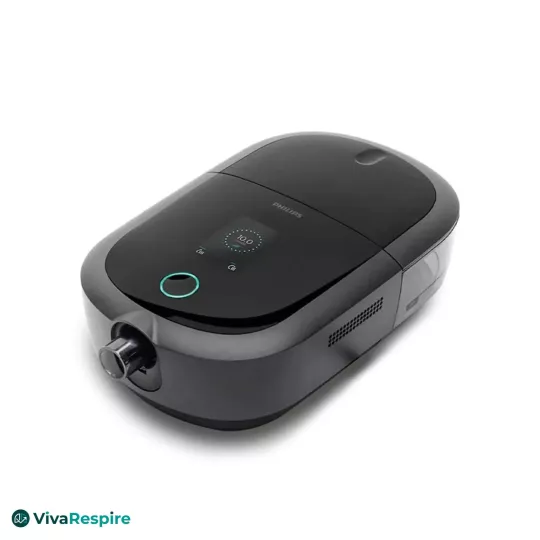
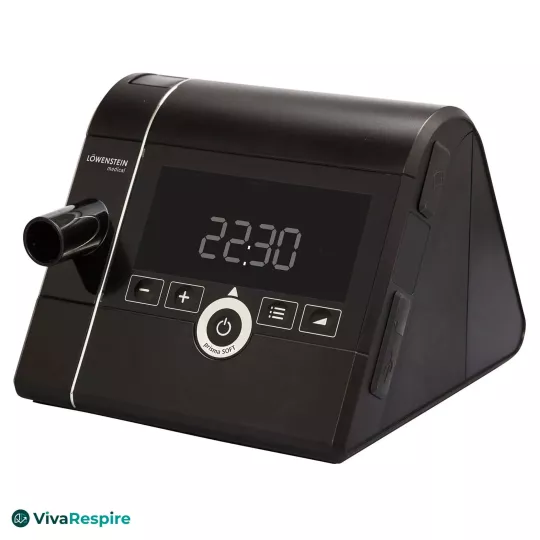
Auto CPAP machines (or APAP / Auto-CPAP) are sleep apnea devices able to automatically adjust pressure during the night. They adapt pressure based on your breathing and detected events (apneas, hypopneas, flow limitations).
This type is often chosen to improve comfort, limit unnecessary high pressure and offer a more personalized therapy, especially when pressure needs vary during sleep.
An Auto CPAP treats obstructive sleep apnea by keeping airways open while adjusting pressure to current needs. The goal is to reduce apneas, nocturnal micro-arousals, snoring and daytime sleepiness.
An Auto CPAP delivers pressurized air through a tube and mask. Unlike a fixed CPAP, it uses sensors and algorithms to analyze breathing and adjust pressure within a defined pressure range (min and max).
When obstruction signs are detected (snoring, flow limitation, apnea/hypopnea), the device gradually increases pressure. When breathing stabilizes, it can lower pressure to improve comfort.
Several criteria guide the choice of an Auto CPAP:
The choice of model and settings should ideally be made with a healthcare professional to guarantee effective and comfortable therapy.
No technical difference. All three terms describe the same principle: a CPAP that auto-adjusts pressure within a defined range. APAP stands for Automatic Positive Airway Pressure. Auto-CPAP and Auto CPAP are the same. On product sheets, manufacturers often use "AutoSet" (ResMed), "Auto" (Philips, Löwenstein).
Auto CPAP adapts to your instant needs: useful if pressure varies with position, REM, alcohol, congestion. Fixed CPAP always delivers the same pressure: enough if your need is stable. In first line, most prescribers go for Auto for comfort. Fixed remains relevant after months of titration once the optimal pressure is known and stable.
The AirSense 11 AutoSet is the most used worldwide, with the most mature software ecosystem (myAir). The DreamStation 2 focuses on compactness and built-in humidifier. The prisma SMART is made in Germany, among the quietest (~26 dBA). If you start therapy or want a safe choice, the AirSense 11 is the safe bet.
The default range is 4 to 20 cmH₂O on most Auto CPAPs. Your doctor may narrow it based on titration: for example 6–14 cmH₂O if a polysomnography showed an effective pressure around 10. A narrower range stabilizes therapy; a wider range gives the algorithm more freedom. Always follow medical prescription.
Yes. CPAP is a class IIa medical device. In most European countries, purchase requires a prescription from a doctor (general practitioner, pulmonologist or sleep specialist) stating the pressure range and auto mode.
Slightly, yes. Expect about €40-60 difference between the fixed and auto version of the same model. For example the AirSense 11 Elite (fixed) is €520, the AirSense 11 AutoSet €560. The difference is quickly absorbed by the comfort and flexibility offered by auto-adjustment.
For most obstructive sleep apnea cases, yes. Some situations prefer fixed pressure or a BiPAP mode: severe central or mixed respiratory insufficiency, complex profiles, or patients very sensitive to pressure variations. Your prescriber chooses the mode best suited to your profile.
The Belgian INAMI/RIZIV convention does not work via purchase reimbursement but via convention: the approved sleep center provides the device on loan (you do not own it). VivaRespire is outside the convention: you buy your Auto CPAP and it is yours. To understand the difference, see CPAP reimbursement in Belgium.
What our customers say
Verified reviews from real CPAP patients across Europe.
Recent customer testimonials
J'ai commandé une CPAP Airsense 11. Arrivée rapidement. Tout est nickel.
Très bon site pour le matériel. Et il y a plein d'astuces et d'explications super utiles.
Belle expérience d'achat et j'ai eu réponse à toutes mes questions concernant le produit, prix et le suivi. Je conseille vivement si on veut avoir recours à un vrai professionnel du domaine.