En
 Français
 Nederlands
 Deutsch
 Español
 Italiano
New

CPAP equipment hygiene is essential for respiratory health and accessory lifespan. A poorly cleaned mask becomes a nest of bacteria inhaled every night. A damp tube fosters mold. This category includes wipes, brushes, mild soaps and disinfectants specifically suited to CPAP equipment.
Catalog in active expansion at VivaRespire. See also our practical guides on CPAP equipment maintenance.
CPAP equipment cleaning is not optional. It's both a health requirement (you inhale 7-9 hours per night what passes through the hose and mask) and an economic one (clean equipment lasts far longer).
Manufacturers (ResMed, Philips, F&P) recommend daily cleaning of mask and chamber, and weekly cleaning of the hose. With the right products suited to medical plastic and silicone, the operation takes 5 minutes per day.
Daily (2 minutes):
Weekly (15 minutes):
Monthly (30 minutes):
Not every product is compatible with CPAP medical silicone and plastic:
See also: CPAP filters, humidifiers, tubes.
The cushion is cleaned daily (damp cloth or CPAP wipe) and the full mask (cushion, headgear, frame) weekly with warm soapy water. Once a month, deep disinfection with diluted white vinegar, 1 part to 10 parts water on the AirSense 10 and 1 volume to 9 volumes on the AirSense 11. A well-cleaned mask lasts longer and limits skin irritation.
A mild unscented soap: pure Marseille soap, liquid baby soap, or mild unscented dish soap. Strictly avoid: alcohol, bleach, scented soaps, pure vinegar. Fragrances leave residues that are inhaled. Alcohol degrades silicone. Prefer CPAP-specific wipes alcohol-free for daily use: they're formulated for medical silicone.
No, never. Dishwasher heat and water pressure deform the hose and damage connectors (especially for ClimateLineAir heated hoses with electronics). Manual washing only: run warm soapy water through the tube, shake, rinse, hang vertically to dry 6-12 h. Only some Cleanable humidifier chambers can go in the dishwasher (top rack, explicit marking).
Always diluted white vinegar, and the dilution depends on your device: 1 part vinegar to 10 parts water on the AirSense 10, 1 volume to 9 volumes on the AirSense 11, never bleach. Vinegar disinfects, descales and isn't toxic as residue. Bleach damages plastic, leaves toxic residue even after rinsing, and isn't more effective than vinegar for daily bacteria. 30 min/month soak suffices. Rinse thoroughly with clear water afterward.
Ozone (SoClean) or UV machines promise automated disinfection without disassembly. The medical view is mixed: ozone damages silicone long-term (accelerated aging, yellowing) and can leave respiratory residues. ResMed and Philips advise against their use and don't honor warranty for related damage. Manual cleaning with soapy water + monthly vinegar remains the safe and economical reference.
Smell always comes from residual moisture growing mold or bacteria. Solutions: (1) fully dry hose and chamber every day, air-drying, hung vertically, (2) weekly soapy cleaning, (3) monthly diluted white vinegar disinfection, (4) if smell persists after rigorous cleaning, the part must be replaced (deeply impregnated silicone).
No. Modern CPAP filters (ResMed AirSense 10 and 11, Philips, Fisher & Paykel) are disposable. The old ResMed S8 and S9 had a washable foam filter, but that era is over. Washing a disposable filter destroys its fibre structure and its filtering ability. Replace it every 4 to 6 weeks, that is all, and it is the cheapest consumable in the therapy.
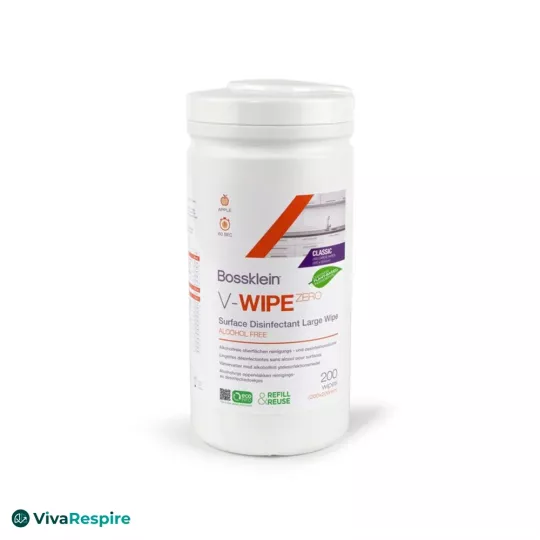
To go beyond mild soap, add: alcohol-free CPAP wipes, handy for the cushion day to day, a fine nylon brush for the corners of the mask (elbow, exhalation port), a drying stand to hang the tube and mask vertically, and a supply of whatever water your device calls for. Current prices are on each product page.
What our customers say
Verified reviews from real CPAP patients across Europe.
Recent customer testimonials
J'ai commandé une CPAP Airsense 11. Arrivée rapidement. Tout est nickel.
Très bon site pour le matériel. Et il y a plein d'astuces et d'explications super utiles.
Belle expérience d'achat et j'ai eu réponse à toutes mes questions concernant le produit, prix et le suivi. Je conseille vivement si on veut avoir recours à un vrai professionnel du domaine.