 En
En
 Français
 Nederlands
 Deutsch
-10%
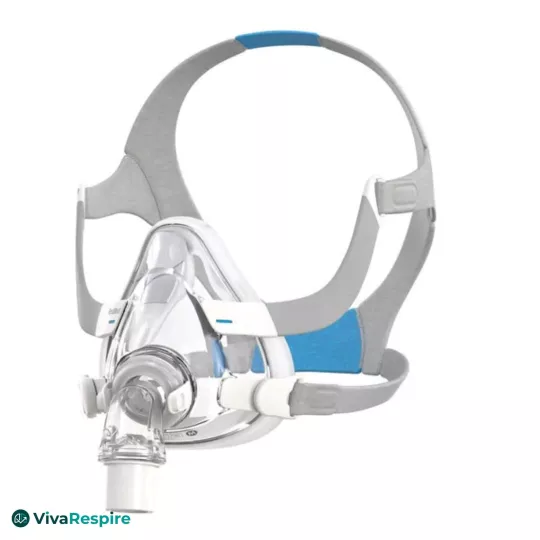

A full face CPAP mask covers both the nose and mouth. It is the essential option for patients who breathe through the mouth at night, those with chronic nasal congestion, or whose therapeutic pressure exceeds 14 cmH₂O (above that, nasal or pillow masks leak too much).
At VivaRespire, find segment references: ResMed AirFit F20 (global best-seller), AirTouch F20 (soft fabric), AirFit F40, Philips DreamWear Full Face, F&P Evora Full Face, Vitera and Simplus.
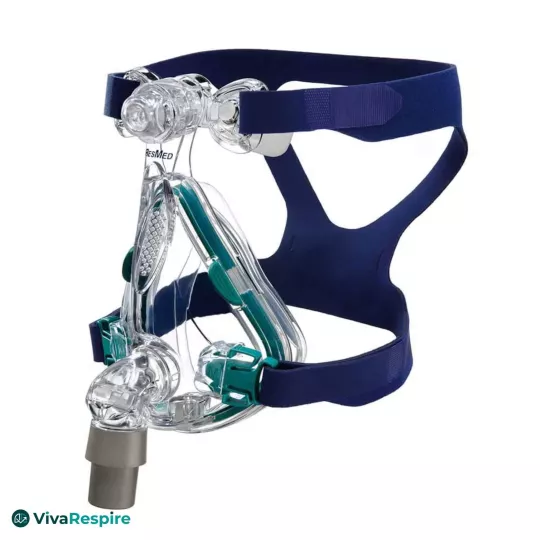
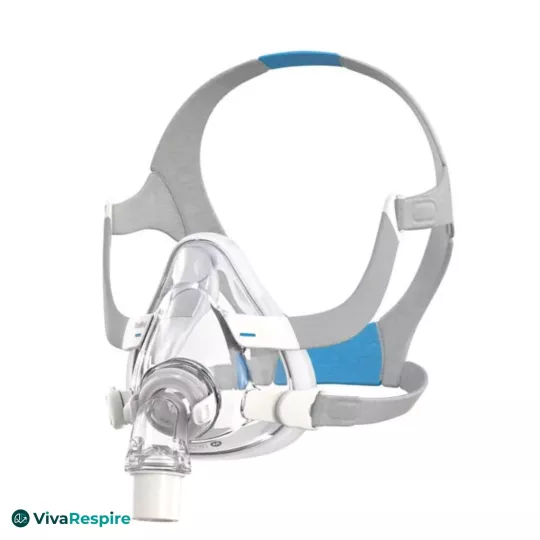
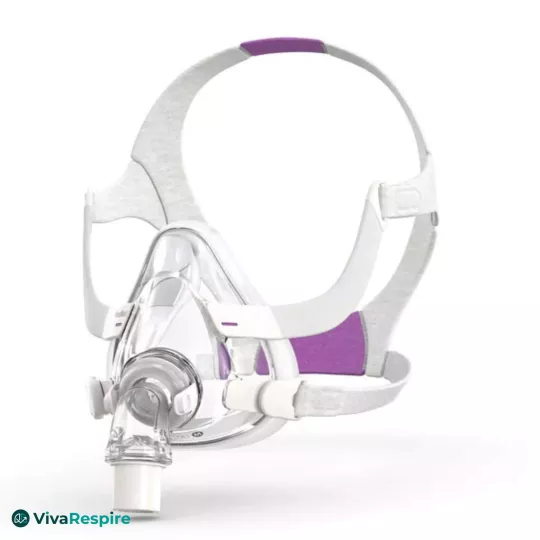
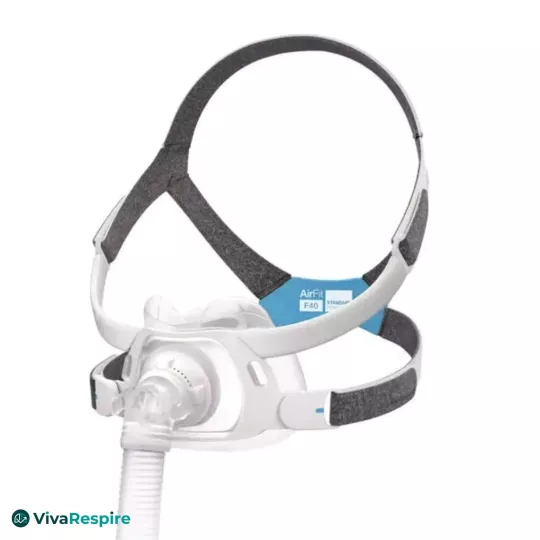


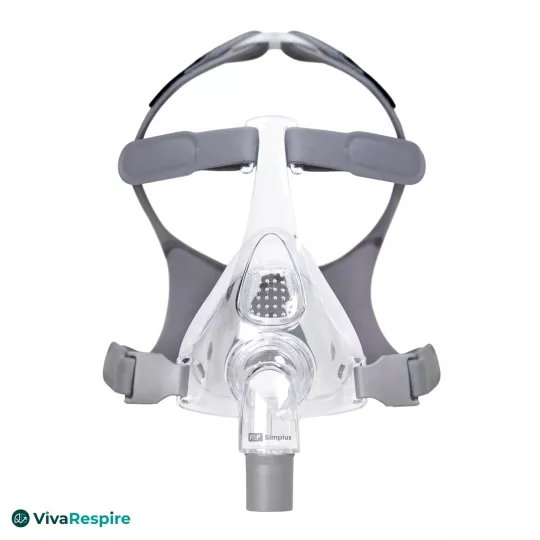
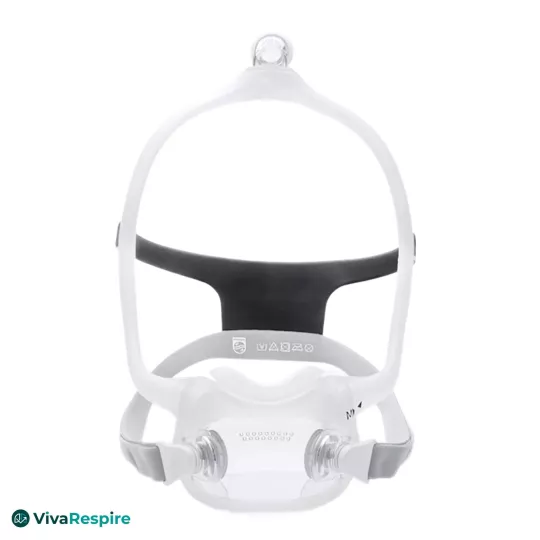
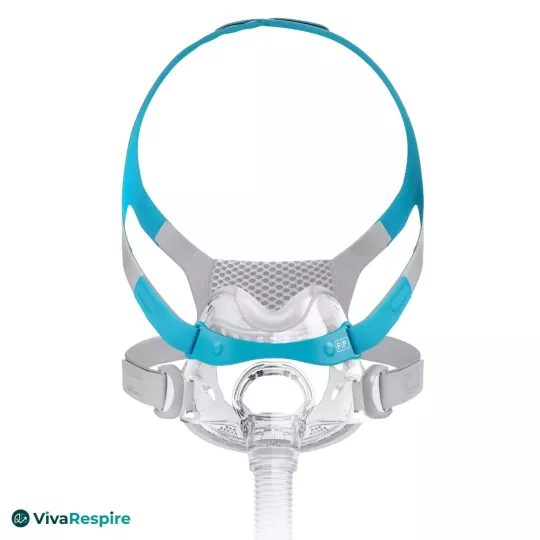
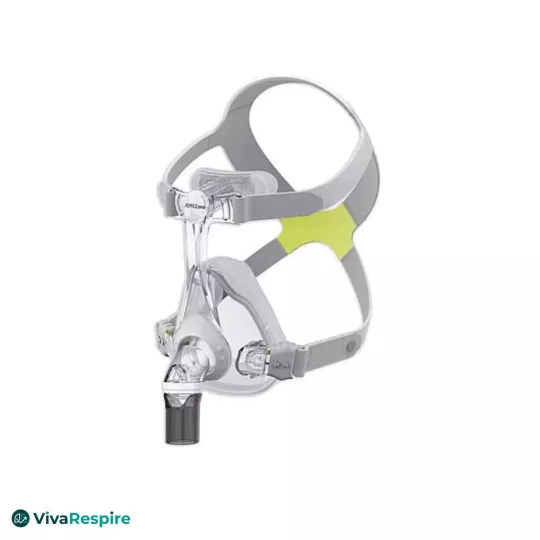
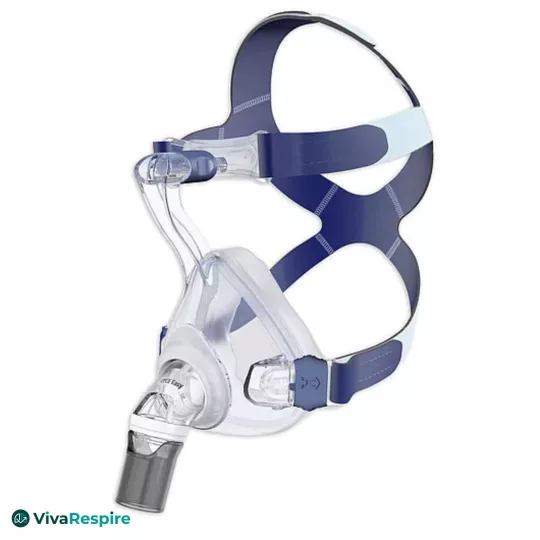
Full face CPAP masks cover both nose and mouth. They ensure effective therapy even when nighttime breathing is oral or mixed, and stay leak-free at high pressure.
It is the most stable and versatile mask type. Sleep centers often recommend it as first choice to minimize leak risks and ensure adherence.
The ResMed AirFit F20 is the global reference and absolute best-seller: easy to fit, leak-free, durable. The safest choice to start. For sensitive skin, the AirTouch F20 is the same base with a soft fabric cushion. For premium comfort, the Vitera is excellent.
Three indicators: (1) you wake up with dry mouth (sign of mouth leak with a nasal mask), (2) your doctor prescribed CPAP pressure above 14 cmH₂O, (3) you have a chronically stuffy nose. If any apply, full face is right for you.
Same structure (frame, headgear, exhalation valve) but different cushion. The AirFit F20 has a classic durable InfinitySeal silicone cushion. The AirTouch F20 has a memory foam cushion, softer for sensitive skin but wears out faster (more frequent replacement). You can actually swap the two cushions on the same frame.
Three rules: (1) adjust headgear with balance — neither too tight (marks) nor too loose (leaks), ideally with pressure on to feel the seal; (2) pick the right cushion size (S/M/L) — most leaks come from a wrong cushion size; (3) replace the cushion every 3-6 months (silicone deforms over time).
Yes, but some models suit it better. Masks with tube on top of head (AirFit F30i, DreamWear Full Face) are the most comfortable on side because the tube doesn't get caught in the pillow. Otherwise, a CPAP pillow with notch helps. For stomach sleeping, prefer top-tube models.
At VivaRespire, complete full face masks range from €140 to €220. AirFit F20 and Simplus are around €150-170, Vitera around €190. Replacement cushions alone cost €30-50.
Yes. All full face masks use a standard 22 mm connector and work with any CPAP: ResMed AirSense, Philips DreamStation, Löwenstein prisma, Sefam EcoStar, etc. Only exception: the ResMed AirMini requires specific "for AirMini" masks (the AirFit F20 for AirMini exists).
Each manufacturer offers a printable sizing template from its official site. Place it on your face, compare and choose the size (S/M/L). Generally: S for women or thin faces, M for most men, L for stronger morphologies. When in doubt, M is the safest bet.
What our customers say
Verified reviews from real CPAP patients across Europe.
Recent customer testimonials
J'ai commandé une CPAP Airsense 11. Arrivée rapidement. Tout est nickel.
Très bon site pour le matériel. Et il y a plein d'astuces et d'explications super utiles.
Belle expérience d'achat et j'ai eu réponse à toutes mes questions concernant le produit, prix et le suivi. Je conseille vivement si on veut avoir recours à un vrai professionnel du domaine.