Sleep apnea complete guide
Understanding Sleep Apnea: A Complete Guide
Sleep apnea is one of the most common and most under-diagnosed sleep disorders. In Belgium, 188,500 people were being treated for sleep apnea through the INAMI in 2024, 77% more than in 2018. In the landmark Wisconsin study, moderate to severe sleep apnea affects 10 to 17% of men and 3 to 9% of women aged 30 to 70 (Peppard, 2013); there is no Belgium-specific figure. An estimated 80% of cases go undiagnosed. This guide explains everything you need to know: definition, types, symptoms, consequences, diagnosis and treatment.
What is sleep apnea?
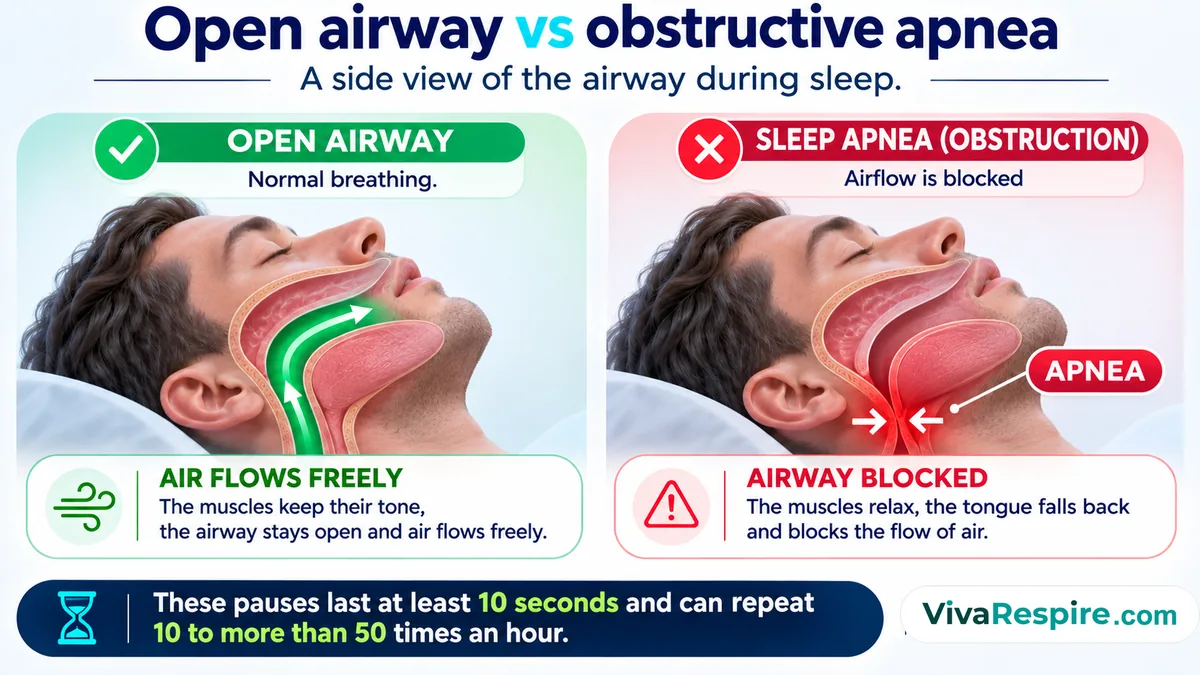
Sleep apnea - or Obstructive Sleep Apnea-Hypopnea Syndrome (OSAHS) - is a disorder characterized by repeated pauses in breathing during sleep. These breathing pauses, called apneas, generally last between 10 and 30 seconds, sometimes longer.
During an apnea, the brain detects the drop in blood oxygen and sends an alarm signal: the patient briefly wakes up - usually without remembering it - to resume breathing. This cycle can repeat dozens or even hundreds of times per night, fragmenting sleep and preventing any normal recovery.
The three types of sleep apnea
There are three forms of sleep apnea, depending on the mechanism:
- Obstructive sleep apnea (OSA) - 90% of cases: throat muscles relax during sleep, blocking the airways. Respiratory effort is maintained but air no longer passes. This is the most common form, treated by CPAP.
- Central sleep apnea: the brain does not send the correct signals to the breathing muscles. The airways are clear, but respiratory effort is absent. Rarer, it sometimes requires ASV ventilation.
- Mixed apnea: begins as a central apnea and evolves into an obstructive component. Rarer and more complex to treat.
This guide focuses mainly on obstructive sleep apnea, which accounts for the great majority of diagnosed cases.
Symptoms of sleep apnea
Sleep apnea shows itself in varied and often insidious ways:
- Loud and regular snoring - present in about 90% of apnoea patients
- Breathing pauses observed by the sleep partner - the most specific sign
- Chronic fatigue upon waking despite 7 to 8 hours of sleep
- Excessive daytime sleepiness - involuntary dozing during the day
- Morning headaches related to nocturnal hypoxia
- Concentration and memory difficulties, brain fog
- Nocturia - frequent nighttime urination
- Waking with a choking sensation
Other symptoms can complete the picture: irritability, lower libido, dry mouth on waking, night-time gastro-oesophageal reflux, night sweats, treatment-resistant hypertension.
Causes and risk factors
Sleep apnea results from a combination of anatomical, physiological and behavioural factors:
- Anatomical factors: narrow or receded jaw, enlarged tonsils, large tongue, short wide neck, deviated nasal septum
- Behavioral factors: overweight and obesity, alcohol consumption, sedatives or sleeping pills, smoking, sleeping on the back
- Physiological factors: reduced muscle tone of the airways, chronic inflammation, nasal congestion, gastro-oesophageal reflux
- Non-modifiable factors: age (increased risk after 50), male sex, menopause in women, genetics and facial morphology
In children, sleep apnoea often has other causes (tonsils, adenoids) and other signs: see our page on sleep apnoea in children.
Health consequences
Untreated sleep apnea is not a mere inconvenience. It has serious short- and long-term health consequences:
- Cardiovascular risks (high): hypertension, for which apnea is the associated cause found most often when blood pressure resists treatment, atrial fibrillation (risk roughly doubled in severe apnea), heart failure, heart attack, stroke. In patients whose hypertension resists medication, apnea is the associated cause found most often: 64% in a series of 125 patients, against 5.6% for primary aldosteronism (Pedrosa et al., Hypertension 2011).
- Cognitive disorders: concentration and memory difficulties, mood disturbances, irritability, increased risk of depression.
- Diabetes and metabolism: worsened insulin resistance, increased risk of type 2 diabetes, weight gain due to hormonal disruption.
- Accidents and sleepiness: untreated daytime sleepiness is one of the highest risk factors for road accidents, the finding behind European Directive 2014/85/EU - with legal implications for professional drivers.
Diagnosis: the AHI index
Diagnosis is based on measuring the AHI (Apnea-Hypopnea Index) - the number of apneas and hypopneas per hour of sleep.
| AHI | Severity | Note |
|---|---|---|
| < 5 /h | Normal | No significant apnea |
| 5 to 15 /h | Mild apnea | Treatment based on symptoms |
| 15 to 30 /h | Moderate apnea | Treatment recommended |
| > 30 /h | Severe apnea | Urgent treatment |
The AHI is measured through two main tests: ambulatory polygraphy (at home) and polysomnography (in a sleep center, more comprehensive). In Belgium, from age 16, the INAMI CPAP convention requires an OAHI of 15 or more: at least 15 obstructive apneas or hypopneas per hour, measured by polysomnography.
Available treatments
CPAP (Continuous Positive Airway Pressure) is the gold standard treatment for moderate to severe obstructive sleep apnea. The device delivers pressurized air through a mask to keep the airways open during sleep. It eliminates apneas, snoring, and improves quality of life from the first weeks.
Other treatments exist depending on the patient profile:
- Mandibular advancement device (MAD): a custom dental appliance, worn at night, that moves the lower jaw forward
- Positional therapy: for apnea occurring only when sleeping on the back
- Surgery: where an anatomical cause is identified (tonsils, nasal septum, maxillofacial malformation)
- Weight loss: can reduce the AHI significantly but generally does not replace CPAP
Why buy your CPAP from VivaRespire?
VivaRespire is a Belgian CPAP equipment specialist. Unlike the INAMI convention where you use a device provided by an approved center, at VivaRespire you own your device. Benefits: free choice of model, no observance constraints linked to the convention, equipment available immediately with no waiting list.
Our most popular CPAP devices:
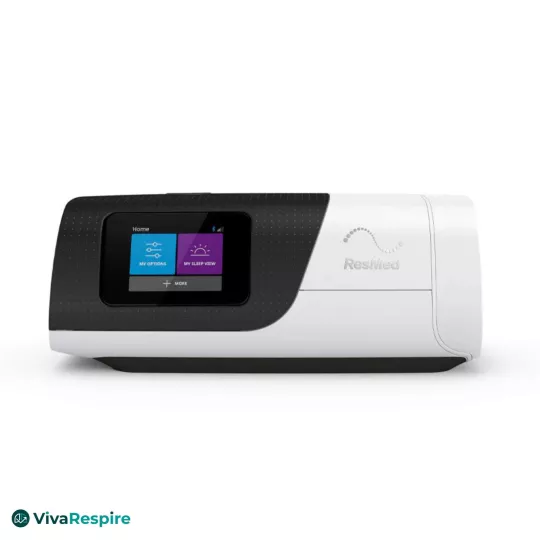
- ResMed AirSense 11 AutoSet
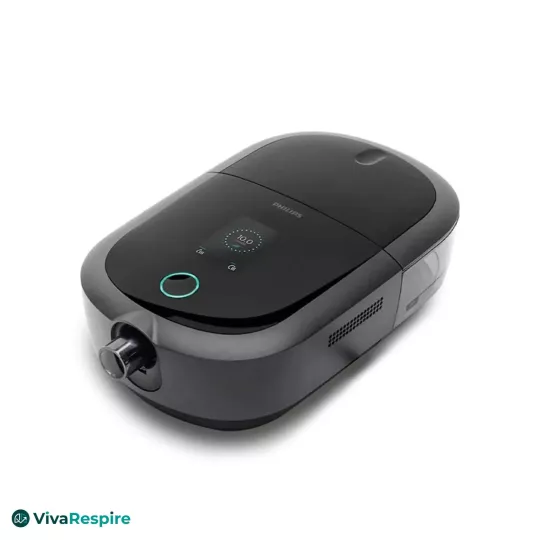
- Philips DreamStation 2
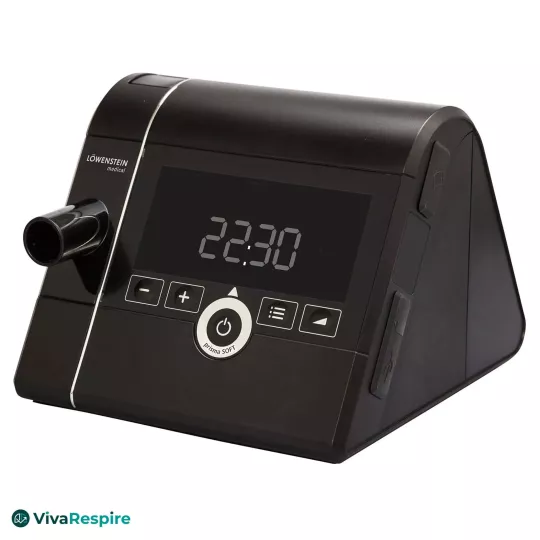
- Löwenstein prisma SMART max
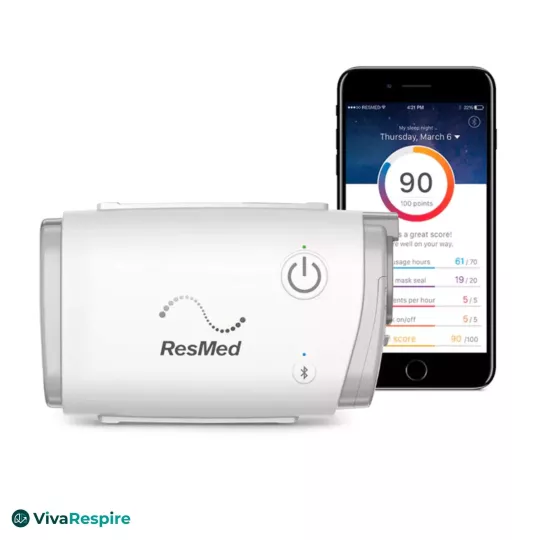
- ResMed AirMini - travel CPAP
Browse our full range: Auto CPAP | All CPAP devices | CPAP masks